School Goal Two
To continue to support students to engage in the learning process and to see themselves as a member of their school community while fostering a sense of belonging.

How do we engage students and help them to recognize themselves as learners and part of the learning process?
Our learners come from culturally rich and diverse backgrounds. Many students are eager to be involved in activities and athletic opportunities provided through the school. Students have communicated that it is important for them to experience a sense of belonging and to have themselves represented throughout the school community. Staff continues to be responsive to supporting students when there has been perceived racism and continuing to ensure that all students feel safe and supported in their learning environment.
- FAAS/PHE assessments identifying students who are Emerging
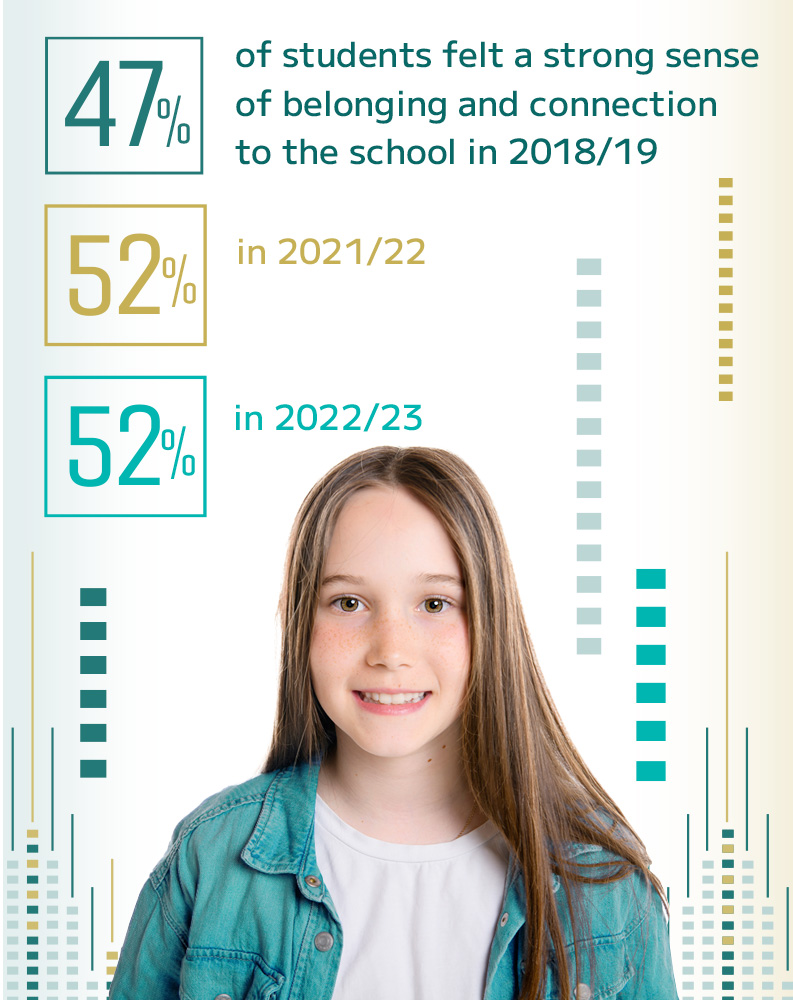
- Student Learning Survey data regarding mental health and belonging
This goal and focused inquiry question aligns directly to our district strategic priority in Mental Health and Wellness. Additionally, our intended approaches are deeply connected to First Peoples Principles of Learning.

First Peoples Principles of Learning

The Sense of Belonging Goal needs to ensure that:
- Learning requires exploration of one’s identity
-
Learning ultimately supports the well-being of the self, the family, the community, the land, the spirits and the ancestors
- Connecting with District Student Voice Committee to receive ongoing feedback on mental health and belonging needs;
- Created programming and clubs that focus on Indigenous students to increase their feeling of connection and belonging to our school community;
- Counselling and Youth and Family counsellors creating clubs or groups to target social emotional learning for our most vulnerable students;
- Collaborating with Cat Jensen, District Counsellor, around implementation of Second Step Program;
- Engaging staff in rich professional learning on the topics of mental health, SOGI and anti-racism education;
- Continuing to support our grade 8 teachers to deliver the Mental Health Literacy unit; and
- Continuing to conduct empathy interviews with a cross section of students to hear feedback regarding their feeling of belonging and their role as a member of the school community.



Over the 2025-26 year, we will track progress on our initiatives identified in this year’s plan. More specifically:
- Out of 318 students surveyed in 2015, 86% reported having at least one adult in the building who cares about them and how they are doing—highlighting strong relational connections within the school community.
- Student survey results show a 12% increase in students reporting that adults in the building treat them fairly, indicating improved perceptions of school climate and relationships.
- During the 2024–25 school year, one Indigenous student joined a school sports team. In the current 2025–26 school year, eight Indigenous students have already joined a team. This marks a significant and encouraging increase in participation, reflecting the positive impact of ongoing efforts to foster inclusive and welcoming extracurricular opportunities for all students.
Summary learning, based on evidence gathered over the year, will provide us with key learnings to guide next steps for the 2025-26 school year and beyond.
- Continue to support and expand initiatives that promote the creation of inclusive clubs and sports teams, ensuring all students feel welcomed and have opportunities to participate.
- We will conduct a comprehensive survey across all grade levels to gather student perspectives on how well staff are connecting with them and creating meaningful opportunities for engagement and growth.